


In 2015, body art is as common as cell phones and social media. In fact, you have to be north of 30 to recall a time when two of those staples didn’t exist. Tattoos, on the other hand, have been around, seemingly, forever. A recent Bored Panda post, and the prominence of tattoos in Ruby Ink, got me thinking about the vast history of the topic. From Henna-dyed Egyptians to Julius Caesar, Somoan warriors to 18th century British officers, tattoos are a well-documented form of expression.
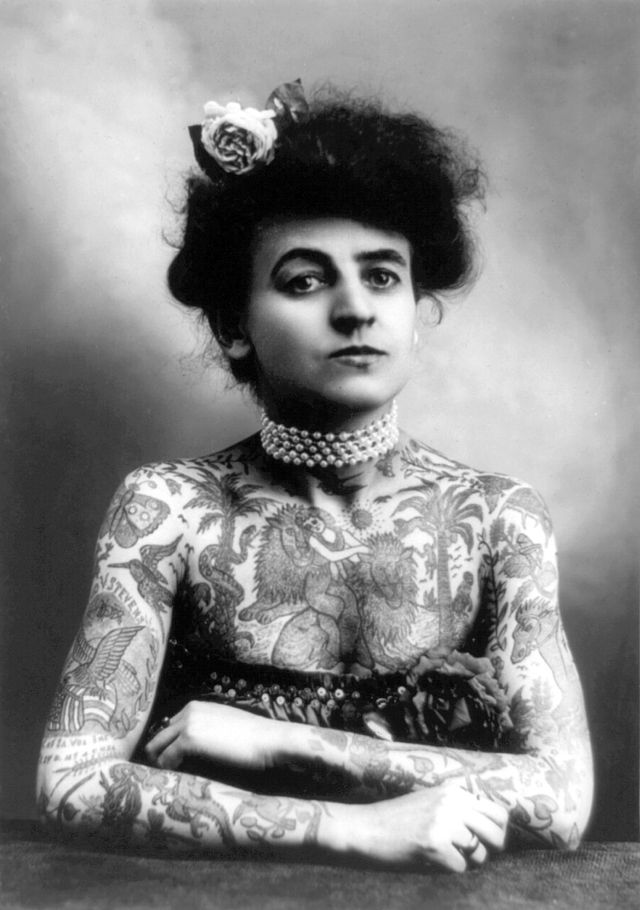
In the United States, the history of ink is more casual, kind of like back roads on a map— always there, not necessarily seen at a glance, and never erased. My earliest recollection of tattoos belongs to a dog-eared copy of Playtime for Nancy—go figure. In the story, Nancy takes a trip to the circus where she gorges herself on hotdogs and soda to the point of puking. Amid the lesson about quality versus quantity, the book references the circus’s tattooed lady, who is stereotyped along with the fat lady and happy trained elephants. Interesting how times change and mercifully people evolve. Today, the same number of tats and a couple of bucks might get you in line at Starbucks, but it certainly won’t rate as an attraction.
Aside from Nancy, I had an uncle who—much to my mother’s disapproval—proudly bore several tattoos. He was a jokester of sorts, a man whose ink complemented his irreverent, colorful nature. He would have been a prime candidate for Bored Panda pixs, if the Lucky Strikes hadn’t gotten to him first.
Ink, for as long as it’s been around, can brand wearers and readers in new and evocative ways. Case in point, my decision to use tattoos as the symbolism in Ruby Ink. I wasn’t breaking new ground; in fact, the easy popularity of tattoos may have spurred me on. Body art is, nowadays, so accepted I saw the tats as a relatable hook for readers. Although, admittedly, one scene in particular uses the tattoos as a well-placed plot device, cranking the heat up a notch. See how I put body art and my characters to work in this exclusive, sneak peek excerpt.While tattoos are universal, their individual meanings are highly personal, and I didn’t hesitate to take advantage in Ruby Ink.
Want to read more Ruby Ink and discover if Aaron triumphs? Pre-order today, read the book on March 31st! And don’t forget, only days left to enter my $100 Amazon Gift Card Giveaway! Click here to enter.