• Home
  • Books
  • Bio
  • The Series
  • News
  • Media Room
  • Mailing List
  • Contact

L.J. Wilson

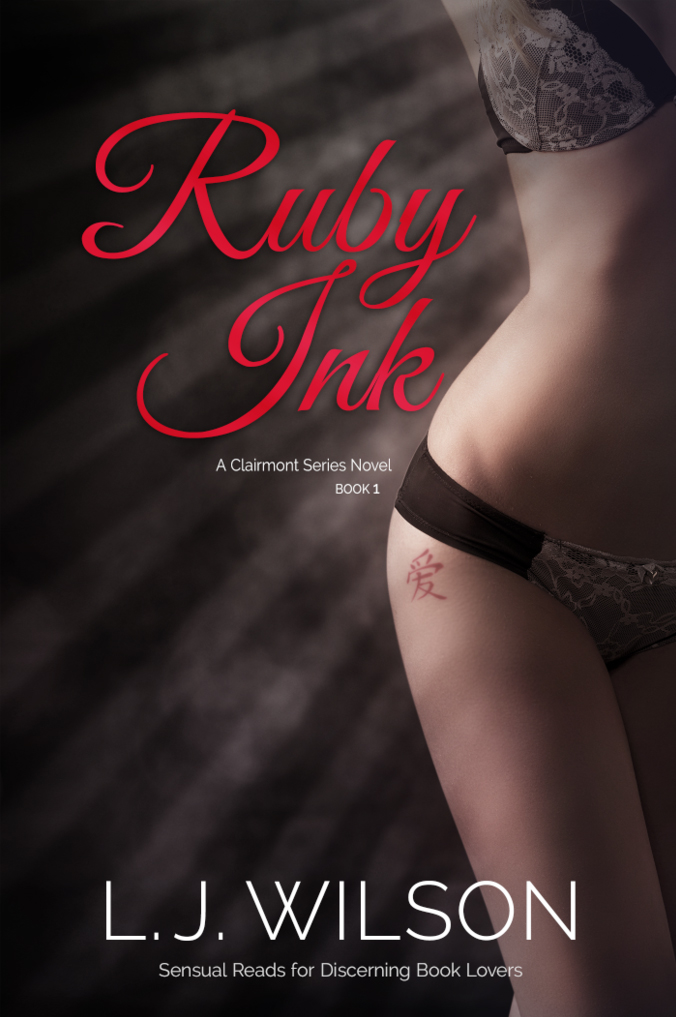
Author of Ruby Ink

JOIN THE MAILING LIST
Follow L. J. on FacebookFollow L. J. on TwitterFollow L. J. on PinterestFollow L. J. on Google+Follow L. J. on GoodreadsFollow L. J. on Instagram
Follow Us on FacebookFollow Us on Google+Follow Us on TwitterFollow Us on PinterestFollow Us on RSSFollow Us on GoodreadsFollow Us on Instagram
AB Edge
(2016-05-17)

Buy the Book

Amazon

Buy the eBook

Kindle
Nook
iBooks
Kobo

Recent Posts

  • How to Post Your Novel Status on Facebook
  • Seriously? She Writes Romance?
  • Big Author Goals, Medium on the Side
  • Hot Off the Press!
  • Catching the Ghostwriter

Recent Comments

  • Online SEL Kindergarten Grade Program on Oh, the Drama!
  • https://rostovfeya2.net/ on Oh, the Drama!
  • link slot online on Oh, the Drama!
  • slot deposit 10k on Oh, the Drama!
  • биткойн инвестиции on Oh, the Drama!

Archives

How to Post Your Novel Status on Facebook

November 2, 2015 by L. J. Wilson Leave a Comment

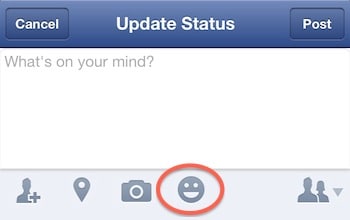
975708_10101459160073470_57961841_nFor what seems like stationary thing, status is a busy word. It can tell you something simple, like the “in transit” location of the cat tree you ordered on Amazon. Traditionally, the word status speaks to one’s life achievements. Nowadays, status is most commonly associated with Facebook vernacular. The other day, because my brain hit a wall, (not so strange) I thought: What if you could capture a novel’s progress in terms of a Facebook status? Would it look something like this?

To Send a Friend Request: This is where you and your novel idea meet—maybe it’s in a bar, maybe it’s at the dry cleaner. But it starts with a casual glance, an idea that seems… appealing. The next thing you know you’re trolling Facebook, searching names. It has to be the right name. (Hopefully you haven’t met John Smith, because Facebook is a big place and you could literally spend days searching for your particular John Smith) In the case of a book, you’ll likely settle on a few names for your burgeoning characters. You might change them along the way; you might not. Names are a highly personal choice for the author. But I’ve noticed this about novel names: Alice, Emma, Sarah, or Ann is far more likely to show up as a female protagonist than Helga, Irene, Rita or Gladys. Interestingly, I couldn’t draw the same conclusion about the names of male characters.

Let’s assume your book accepts your friend request and the two of you are …

In a Relationship: Things begin to happen. In terms of a book, this means your plot is brewing. Like any relationship, and if you’re wise, there is a reasonable getting to know you period. This is where you figure out if you and your book have any chance at a future. It starts out like wildfire—there’s chemistry. It’s hot and sexy—though not necessarily sexual—and a page-turner. You don’t want to do anything but be with this book. You barely have to make an effort and things happen. It’s magic.

Then around page fifty (the three-month mark for human relationships) you hit a snag.

Suddenly this book has a few bad habits that are hard to overlook. Instead of pages on fire, you’re holding a book of wet matches. It all seems so confusing and frustrating and, quite facebook-broken-heartfrankly, pointless to continue. The characters you thought you’d fallen in love with don’t appear exactly as advertised. There’s a fight and you almost give up. You yell. You may throw things. You are ugly to the people you live with. You consider changing your Facebook status to separated, maybe even back to single.

To hell with this stupid book.

But then you notice all your mutual friends on Facebook. There are expectations—you’ve posted things about this book relationship. People will notice. You’ll have to explain. Worse, you’ll have to start over. Haplessly… begrudgingly, you trudge forward. And then, damn. Before you know it, you have more than one hundred pages. You and your book have made up. It doesn’t send flowers because, hell, it’s a book—but it does manage to deliver that killer line, at precisely the right moment. You can see a real future with this book and that’s called…

Engaged: This is the day real people post all kinds of sparkly happy shit on Facebook. This might be where writers post: Plunging with hopeful speed toward the last chapter! Ready the champagne! Pray for me! Human counterparts show off surprisingly manicured ring finger close-ups, bearing brilliant diamonds. Maybe it’s tasteful; maybe it’s so big that your Facebook friends secretly message each other saying, “OMG, did you see that post? She just wants to so totally shove it in everyone’s face.”

Either way, as far as you and your book are concerned, this is a sure thing—for better or worse, you are destined to finish this novel and you do. But before long…

tumblr_mb6kk9T1EI1r4nitmo1_500It’s Complicated: You thought you had it. You thought this book screamed, “You complete me…” Then the outside world barges in—what did you expect? This is social media. Everyone will have an opinion. When it comes to your book, this might be your agent or editor. “It’s really very good,” they say. “But just think what would happen if…” You want to cry and shriek and break up all over again—maybe with your agent or editor, but mostly with your book. You don’t want to take it apart and start again. It’s too hard. Dear God, at this point, becoming an astrophysicist would be an easier feat. So you sulk and don’t look at any kind of book for days, maybe a week. You consider deleting the entire thing. But before long, the temptation is too much and you find yourself…

Married: This is code for On Sale Now in the world of books. And for a time, everything is bright and shiny and wonderful. It’s only after the honeymoon stage that you realize this is work. Like a marriage, your book requires your loyal dedication and serious commitment if you want it to succeed. Still, things may be so wonderful that on anniversaries you post one of those Facebook status updates about how lucky you are to have married your “best friend.” Translation: “I wrote a bestseller, and, man, am I damn lucky I stepped in it.”


Filed Under: Blog, Books Tagged With: books, Clairmont Series, Facebook, Ghost Gifts, L. J. Wilson, Laura Spinella, Ruby Ink, status

Seriously? She Writes Romance?

June 1, 2015 by L. J. Wilson Leave a Comment

The blog below originally appeared on One Curvy Blogger. Many thanks to Sarah, who had this to say about Ruby Ink: “Hey, Curvy Readers! Today I have a guest post to share with you guys. Earlier this week I reviewed Ruby Ink. I loved it so much, I invited L.J. Wilson back so she can give us an in-depth peek at the author behind such a unique story!”

ruby-promo-Aar-MindBodySoul-6aIf we met at a party, on an airplane, or got stuck in an elevator, then were asked “Can you tell me something about L. J. Wilson?” the last thing you’d answer is “She writes romance.” Sarcastic, wine drinker, cat person, lover of Georgia football (woohoo, Georgia fan!) and inappropriate humor, any of those would be a solid guess—and you’d be right. I don’t wear romance writer on my sleeve and I tend to roll my eyes at rom-coms. I never got Jane Austen. I am a poor representative of my romantic writing peers.

That said, show me a man with a desperate story and an unshakable love for one woman and I’ll make a hero out of him. I’m fascinated by unearthing the good in a character, and my niche is damaged men. Maybe it’s because the breed is rare and odds of success so small. The best male characters, for me, are those who confound readers in the role of hero but prove to be exactly that. And I’m not talking textbook bad boy, but protagonists challenged by extraordinary circumstance. I’m drawn to their dilemmas—imaginary as they may be—and I love to write about them. Is it fantasy? Perhaps. Is it possible? I like to think it is. Am I encouraging hot daydreams and wistful happy endings? Damn, I sure hope so.

I’ve dabbled in other genres. It’s been suggested that I write thrillers. I’m not so bad with intense action scenes—the rhythm oddly mirrors heated romance—but I’ve always known enough to say “What’s the point?” If I were to spend two-hundred pages plotting a spy novel involving cold war countries and high-tech tactical operations, I’d only end up telling you the love story. How the rebel forces leader—the one who’s really a covert U.S. operative—is secretly planning to rescue his lover, held hostage by an old nemesis.

My Laura Spinella novels, Beautiful Disaster and Perfect Timing (and a third, Ghost Gifts, out next year) are categorized as women’s fiction, but at the heart of each book is a romance. When you write like that it’s a lot to balance. You have to weave romance into other layers, giving each portion of the story amble elbow room. When I committed to Ruby Ink and the Clairmonts, I dove in head first and hard. It was wildly freeing. Readers in this genre would not only welcome, but demand, serious steam. I hope I delivered. I also hope you’ll join me as we unravel the love lives of the entire Tribe of Five—Alec, Aaron, Honor, Jake and Troy—even their never-married parents, Sebastian and Evie, who have their own surprising tale to tell. When it comes to a sexy, thrill-seeking read, you never know what a Clairmont will bring to the pages.


Filed Under: Blog, Writing Tagged With: L. J. Wilson, Laura Spinella, One Curvy Blogger, romance, romance writer, Ruby Ink

Big Author Goals, Medium on the Side

May 18, 2015 by L. J. Wilson Leave a Comment

Let’s just put it out there, up front. The temptation to begin this interview with “Nobody doesn’t like Saralee…” is almost insurmountable. While no doubt author/speaker Saralee Rosenberg has heard that song before, it happens to be the truth—less a thousand calories. A visit to Saralee’s website tells us about her writing success, a colorful array of accomplishments, ranging from New York Times essayist to being a guest on Oprah.

Saralee is also my Girlfriend’s Book Club blog-mate, and one of my favorite author friends. Recently, I had a chance to catch up with Saralee—an uncommon soul, to say the least.  Read on to learn more about Saralee’s ability to reach out and reach beyond.

Caputo-Rosenberg
Saralee and Long Island Medium phenomenon Theresa Caputo

Q. Saralee, even you have to admit that your life and literary experiences are exceptional—everything from appearing on Oprah to interviewing Theresa Caputo, the Long Island Medium. Were there surprises along the way, or did you feel certain life had path and a plan?

A. When your name is Saralee, I think it comes with the territory that life is going to be full of surprises. I never saw it coming that I would leave Indiana at 21, move to New York to seek fame and fortune, go on a blind date a month later and marry that man. Thirty-seven years later we are still together (although if I had committed a felony I’d be out already) and I can say without hesitation that we all make plans and God laughs. But did I always expect to be a writer? No. I wanted to be a model and somebody missed the memo. And yet. I’ve always been funny and loved to write so I’m guessing it was my destiny. I can’t breathe if I can’t write. As for being on Oprah and spending time with Theresa Caputo, icing on the cake.

Q. And now that we’ve mentioned the popular psychic phenomenon, tell us a little about your own intuitive gifts.

A. When I was five, I discovered that my name wasn’t the only thing that was odd about me. I could also sense spirit and understand things that were well beyond my years. But it didn’t always serve me well as people didn’t take kindly to hearing things come out of my mouth that I would had no way of knowing. My father went nuts on me when I told him his father died. Shortly after he received a call from the hospital that he had passed. I learned over the years to keep any predictive powers to myself. Today I am more comfortable with my spirit connections although I believe, and Theresa Caputo said the same thing, we ALL have this ability to communicate with the other side. Sadly, we tend to write off our intuitive thoughts as wishful thinking or an over-caffineited brain. But trust me, we can all connect with the spirits of loved ones if we listen to what is in our heads and our hearts. There are signs everywhere.

Q. How has your gift influenced your writing?heavenly-bench-by-richard

A. I often joke that I’m not a writer, I’m a designated typist. I absolutely channel voices, but I believe every writer does. When we get immersed in our characters lives, we descend into this deep subconscious part of the brain that lets us pull back the curtain and explore different emotions. And though we hear we’re supposed to write what we know, the best advice I ever got was to write about what scared the living crap out of me. When I’m in the zone, I can do that. As for writing about our relationships with the other side, my first three novels focused on spirit communication and my fourth, DEAR NEIGHBOR, DROP DEAD, was a hilarious suburban romp through fences and defenses that also dealt with destiny.  But it is my latest work-in-progress, a novel for younger readers, that I can relate most to in terms of my personal experiences. It is called THE MIDDLE SCHOOL MEDIUM, and it explores different beliefs about life after death. My hope is that children, who are already innately curious about the afterlife, will be relieved to discover that their intuition is spot on.

SR-Podium
Saralee where she’s most comfortable, behind a podium

Q. In addition to writing fabulous books, you’re also the founder of the Women’s Intuition Workshop, a program for learning, laughter and shared experiences. Can you tell us more about this venture? And how can women’s group get in touch?

A. The only thing I like better than writing is talking. For me, heaven is a place where they give me a microphone, a podium and an audience with a great sense of humor. I don’t know. Maybe I was a stand up in a past life. But after many years of doing book talks, I finally decided to focus on a subject that is also dear to my heart. Women’s intuition is dismissed as a joke but it is no laughing matter. I am speaking all over the country to groups that want to better understand their inner senses and use them to deal with challenges. I believe that the answers to our deepest hurts are within our capacity to solve if we listen to our best friend- ourselves. The program I’ve created is inspiring, insightful and a huge amount of fun. The best part for me is when I look out and see a room full of bobbing heads. The international sign for, Thanks! I get it! It’s a great program for fundraisers. For more information on the workshop, email [email protected]

Q. Tell us specifically how writing and the workshop tie together.

A.  I tell audiences that happy endings are not just for the characters in my novels. Which, by the way, is the pact I make with mine after putting them through hell. Other authors can write sad stories or ones with unfinished business, but I prefer to envision my readers hugging my books to their chests and feeling uplifted. So whether I’m writing a novel or speaking at an event, my goal is to entertain and inspire. Our lives are stressful and confusing, but my message is the same. Stop worrying. No matter how much you do, it never  changes the outcome. Equally important, if your blessings outweigh your burdens, and they always do, then you are way ahead of the game.

Q. Your bonus question! Finish this sentence: In ten years I’ll be… And I’ll have…book-3d

A. I already have everything I could ever have hoped for. A beautiful family, an amazing husband, dear friends, good health, a sense of humor and enough money to have my hair blown out every week. But if I had to make a prediction about my future, I would hope that it is exactly the same with one possible exception. I’ll take a best-selling novel or two as a sign that I came back into this life  to make people laugh and think. That would truly be icing on the cake.

Filed Under: Blog, Writing Tagged With: Dear Neighbor Drop Dead, Girlfriends Book Club, L. J. Wilson, Long Island Medium, Saralee Rosenberg, Theresa Caputo, Women’s Intuition Workshop

Catching the Ghostwriter

May 3, 2015 by L. J. Wilson Leave a Comment

house-treeI live an old house. It makes sense: writer, vintage property, high on a hill, seclusion. If the liquor store delivered, I’d never leave. Atmosphere is never in short supply, the house adapting to seasons like a clapboard chameleon. I connected to this house the second I saw it, even after confronted by a kitchen that looked like something the Property Brothers would reject. In its favor was a to-die-for sunroom and built-in character, the kind modern homes can’t possibly produce.
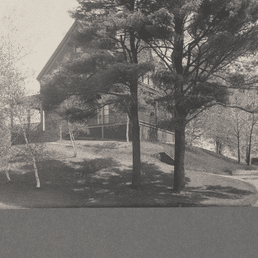
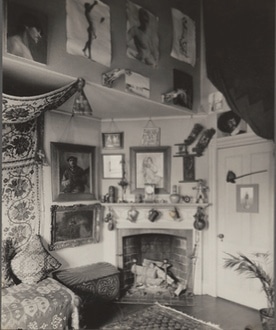
Despite the lures—intangible and otherwise—what I didn’t know was the house’s history. Recorded deeds site conflicting dates: 1900 and 1910 as the year built. At the time of purchase, neighbors-in-the-know and memories were fading fast. No one recalled, with any veracity, its past before the late 1920’s. It didn’t matter. Whatever its history, I was in. Over the years, the house lived up to expectations. I’ve written and sold several novels since living here, wholly inspired by the house on the hill. I’d even go as far as to say the house deserved nearly as much credit as my own imagination.

With that in mind, you might be surprised to learn that recently I discovered I’d been duped. While I’ve been crediting character and gabled rooflines to serving as my steady muse, I should have been thanking Anna Reed Rathbun—my ghostwriter.

Let me explain.

house
Birch Knoll, circa 1900

Last week, a friend sent a link to an online photo album. Its aged leather cover is engraved Birch Knoll. The family name connected to the album was Rathbun. I’d never heard of either. But with the click of a mouse, I found myself looking into a 125-year old mirror. Exterior photos depict a property that sits on a hilly plot of land unique as a fingerprint. Less the sunroom, which I knew was added around 1940, this was my house. But where were the looming water towers? Behind the property sit two impossible-to-miss water towers, erected in 1888. That would put the year built as prior to either date the deed called out. It was the smallest mystery the photos would reveal.

The album went on with interior pictures, both magnificent and perplexing. Room after room was lavishly embellished, showcasing paintings and rich tapestries, bookcases brimming with novels, mementos that reflected imagination and a rousing sense of adventure. Perhaps most stunning are the nude drawings proudly displayed—shocking for the era certainly. Even the ornate furniture and robust potted plants conveyed how much the people who lived there loved life and their home.

Screen Shot 2015-05-03 at 10.14.14 PMBut at a glance, much of the square footage didn’t make sense, neither did the grandeur. The rooms in these photos were dressed like a manor home, not my period Arts & Crafts abode. It was confounding, but eventually I realized how architectural changes aligned with long-ago photos. This was my house, inside and out. But who were the Rathbuns—a name I’d never heard of?  It took some digging to unearth the family, in particular Anna Rathbun. She was a highly accomplished woman for her era and this one. A graduate of Wellesley College, she was schooled in the fine arts, furthering her artistic pursuits in Paris. Apparently, she brought her passion for all art forms into our house, which turned out to be a summer home for the well-to-do Rathbuns of Providence.
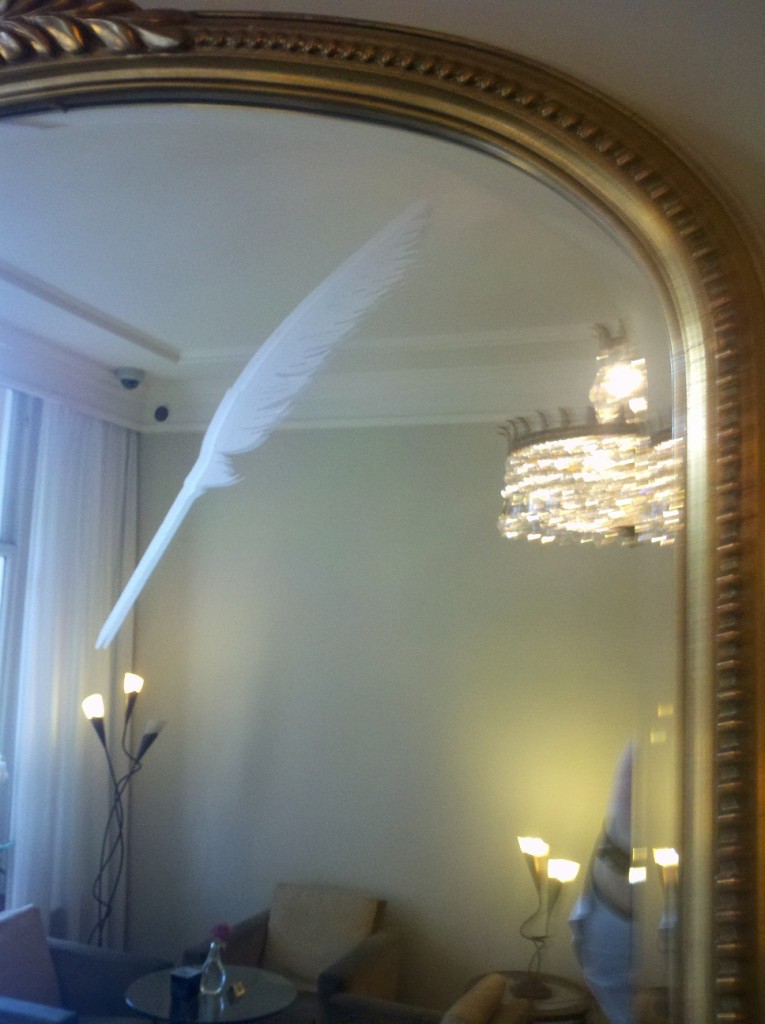
So do I now believe my lovely house is haunted? Not at all, at least not in the chain-rattling, traditional sense. From what I’ve learned about Anna, she doesn’t seem the type to pursue anything so pedestrian. But if muses do exist and creativity is energy, I can only have benefitted from her legacy. That and I stand corrected in attaching inspiration to brick and mortar. My attraction, my connection to the property doesn’t have nearly as much to do with a house as it does the person who lived in it.

Filed Under: Blog, Writing Tagged With: art, Birch Knoll, Ghostwriter, house, L. J. Wilson, Laura Spinella, muse, Property Brothers, writer

Do Writers Dream Differently?

April 19, 2015 by L. J. Wilson 2 Comments

mirror-for-a-writer2I wonder if writers dream differently. It seems like they should. We’re people immersed in parts of our brains that leave others curious as to why we’re not medicated—hourly. On occasion, readers ask if I dream the plots of my books. To a point, yes. But surely not in the way they think—like a movie with an all access pass. I tend to dream on higher ground, if that makes sense. It means I have to search for the connection between the work in progress and the dream. It’s there. It’s just not always obvious.
That is, of course, not to say many authors don’t dream incredibly loud with astonishingly clear results. There are well-documented incidences of authors conjuring up bestsellers in their sleep. The list includes Stephenie Meyer’s Twilight, the biggest, bestselling novel of its genre. The then suburban Arizona homemaker claims to have awakened from a dream that starred two young lovers, lying in a meadow, discussing the obstacles of a bloodthirsty vampire falling in love with an average young woman. Clearly, Meyers was off and running with the lion and the lamb, or perhaps her take on Little Red Riding Hood and “All the better to eat you with, my dear… “

Dreamy plot lines date all the way back to 1816 and an impressionable 18-year old Mary Shelley. One evening, a fireside chat with her future husband and the influences of electrical current on the human body led to a nightmarish dream that ultimately led to the classic Frankenstein. This story always surprises me, as I don’t find the occurrence of the dream nearly as fascinating as a conversation about electrical current. Not in a time where the room was warmed by fire and lit by candlelight. It’s amazing how the imagination can sometimes appear to see into the future.

Stephen King, who says “dreams are like looking at the back of your head with a mirror” has literally dreamt up several of his novels. The most famous dream-story is Misery. While on a flight, King dreamt of a lunatic fan kidnapping her most favorite author and holding him hostage. When he awoke, King was so struck by the dream he plunged directly into the work. He immediately produced the first 50-pages and eventually a best actress Oscar for Kathy Bates, who portrayed they psychotic Annie Wilkes in the screen adaption of the 1988 bestseller.

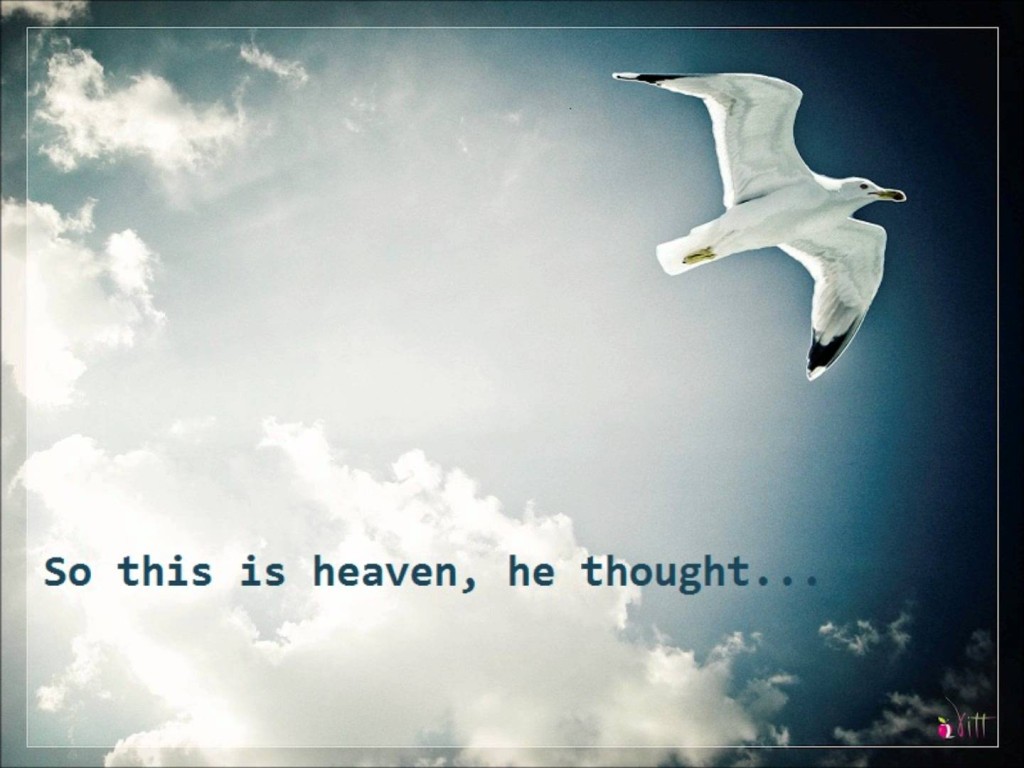
seagullBut not all reverie produces vampires, monsters and psychopaths. The most metaphorical, dream-themed novel is probably Jonathan Livingston Seagull. Author Richard Bach credits a “disembodied voice” whispering the beginnings of the novel in his sleep. Unfortunately, the message fell short, not supplying the middle or end of the allegory. It would take Bach another eight years to complete the fable that elevates a seagull from the basic instinct of scavenging for food, to pursuing flight as the seabird’s higher calling. The unlikely premise also skyrocketed book sales, eventually knocking Gone With the Wind off the all-time bestseller list.
It may be that I sound jaded, but personally I think the soft-rock 70’s era lent itself to some of the book’s success, not unlike the digital age propelling the Fifty-Shades phenomenon. While dreams are important, timing can’t be discounted. It’s probably good to note, now that I’ve brought it up, that Fifty-Shades of Grey was born out of fan-fiction, not a dream—although I wonder if anyone has ever put the question to E. L. James? Surely, that would be a dream sequence like no other.

Filed Under: Blog, Writing Tagged With: dreams, Fifty Shades of Grey, Frankenstein, Jonathan Livingston Seagull, L. J. Wilson, Mary Shelley, Misery, Ruby Ink, stephen king, Twilight, writers

Questions and Answers About Virtual Book Tours

April 12, 2015 by L. J. Wilson Leave a Comment

There’s nothing like a whirlwind book tour! You know the drill: your pub date is set, your book hits store shelves, and your publicist spends hours tweaking your book tour itinerary. No doubt you’ll be crisscrossing the country, checking into 5-star hotels, where naturally a personal assistant will make certain signings and readings run smoothly, not to mention dinner with the Hollywood mogul—the one dying to buy the movie rights. Yes, your book tour will be demanding. But you’re a pro; you’ll power through. In fact, you’ll barely make mention of it when darting for that poorly planned redeye, flying from L. A. to New York. On second thought, maybe someone’s head should roll. What will your fan base think if you stride puffy-eyed onto the set of Regis and Kathie Lee?

Oh, wait. This isn’t 1997.

And another thing, chances are you’re not a New York Times bestselling author.

tlc-logoWelcome to 2015 and modern-day book promotion, which for many authors centers around a virtual book tour. With the reinvention of publishing and the impact of bloggers on the book buying public, virtual book tours are a popular destination. But how do you go about creating a book tour that actually helps sell books? What are the benefits for authors, readers and bloggers? This week Lisa Munley, founder of TLC Book Tours, is visiting with me and offering her keen insights. TLC Book Tours has also put together a top-notch, ten-stop tour for Ruby Ink, starting May 4th! You can check out the dates here.

1. Tell us how a virtual book tour benefits authors, bloggers and readers.

A virtual book tour is simply an efficient way for authors to get the word out about their book to a large number of people in their targeted audience in a short period of time, with minimal effort. The advantage to the author is obvious. They don’t need to travel or make public appearances to get their book in front of potential readers. Bloggers get first crack at new books and enjoy increased traffic to their blogs during the tour. Authors, publishers, and the tour company drive traffic to the blog through their social media channels. One nice thing for bloggers on a tour is that it’s great to be able to hear from other bloggers who’ve read the same book – almost like an online book club. In this day and age you don’t have to be in the same room with people to share an experience. Bloggers on the same tour frequently chat about the book on Goodreads, Twitter, and Facebook. Readers get to follow along with the tour schedule and get many different perspectives on a book. They get to hear from the author through guest posts or Q&A’s, and sometimes have a chance to win a copy of the book.

For more thoughts on the benefits of using a virtual tour company, see: Why TLC?

2. TLC Book Tours is your company. What prompted you into the virtual book tour business?

I was a book blogger beginning in 2007, very active in the blogging community, fielding review requests from a variety of sources. Some of the requests were ridiculous, for books that I had absolutely no interest in. It occurred to me that I could do a better job. I was in a unique position to do a little matchmaking between bloggers and authors/publishers. It made sense to use a more customized approach to find the right type of reader for each book. I contacted another blogger friend, Trish Collins, with the idea for TLC, and was thrilled that she was interested in working with me. We launched in August 2008.

3. What do you think are the indicators for a good book tour? Are there standards that most book tour companies aim for?

I think a tour is successful when it raises the visibility of a book online, since that really is the whole goal. As for standards, I can’t answer that for other book tour companies, but we only work with blogs that have been around for at least a year, are active, well written, and have a decent readership. Our approach is a little different than other companies in that we don’t have a sign up process for tours. We reach out to those bloggers we feel will be a good fit for a particular book.

4. What kinds of books fare best on a virtual book tour? Are there certain genres that perform better than others? Does TLC Book Tours ever turn down a book?

We do tours for all genres. We have a database of more than 2500 bloggers, so we aren’t hitting up the same set of bloggers for every tour. We seek out bloggers who are interested in the type of book we’re touring. If it’s a dystopian novel, for instance, we’re not going to market that to a romance blogger. Literary fiction is not going to go on a blog that reviews chick lit. It seems like common sense, however if you look at the way other tour companies go about it, you’ll see that we are somewhat unique in that regard. We try to make a good match from the beginning in an effort to garner the best possible outcome, which in my mind is a thoughtful review and a lot of interested readers.

Unlike most other tours, TLC tours are review tours. We guarantee a minimum number of reviews on every tour.

We have a policy against touring *most* self published titles, for the simple reason that the majority of bloggers have a policy against reviewing them. If we can’t find enough reviewers, we can’t put together a tour. However, we make exceptions to the rule depending on a number of factors. If the book was professionally edited and we feel it will be marketable to bloggers, we may take it on, depending on our workload at the time. But we are honest in our assessment. If we don’t think we can ‘sell’ it to bloggers, we say so. 

5. Obviously you work a lot with bloggers. In your opinion, how have blogs changed in recent years?

When I started blogging in 2007, the book blogging community was much smaller, with a wonderful feeling of camaraderie. It is different now, just in the sheer volume of blogs, and the community feeling isn’t the same. A lot of blogs have monetized and on some of those blogs, it’s less about the love of books and more about advertising and money. However, there are still a lot of really awesome bloggers. To me, the best blogs are those where the personality of the blogger shines through, where there is discussion of books, and real reviews, rather than cover reveals and blitzes (honestly, I’m not sure what a ‘book blitz’ really is…) 

6. Publishing has changed so much in recent years. Has the onslaught of self-publishing changed the way you manage book tours? Are bloggers more open to reading self-published authors, or is there still a divide?

Times have definitely changed, but I think there’s still a divide. Bloggers are inundated with requests and they have to draw the line somewhere. The bigger bloggers can be extremely choosy. That said, a tenacious self published author can still find bloggers willing to review their book. It just takes a lot longer to ferret out those bloggers. For that reason, we tend to refer self published authors to other tour companies that have better luck finding bloggers to review their work.

About Lisa:

Lisa Munley studied business and marketing at Central Michigan University before moving to Southern California. She worked as an executive recruiter for 10 years until she left to stay home and raise her babies. She is the co-founder of TLC Book Tours, which opened in 2008. For more information visit TLC Book Tours and read author testimonials. Also visit TLC Book Tours on Facebook and Twitter.

Filed Under: Blog, Social Media Tagged With: bloggers, books, L. J. Wilson, promotion, Ruby Ink, TLC Book Tours

What’s Your Social Media I.Q?

April 5, 2015 by L. J. Wilson 2 Comments

Lesson learned, book promotion stops for no holiday. And launch week doesn’t slow down, even if you have a horrid cold. That was me—doing a groggy stumble and sneeze through a week where I would have traded my Amazon rank for one more hit of Nyquil. On the up side, Ruby Ink’s launch is a marathon, not a sprint.

My biggest accomplishment this week was to create an Instagram account. Next week I’m determined to learn how to use it. All authors, I think, have a true love/hate relationship with social media. For the punch it can pack—if properly applied—we authors sure do go into it kicking and screaming. I’m no different.

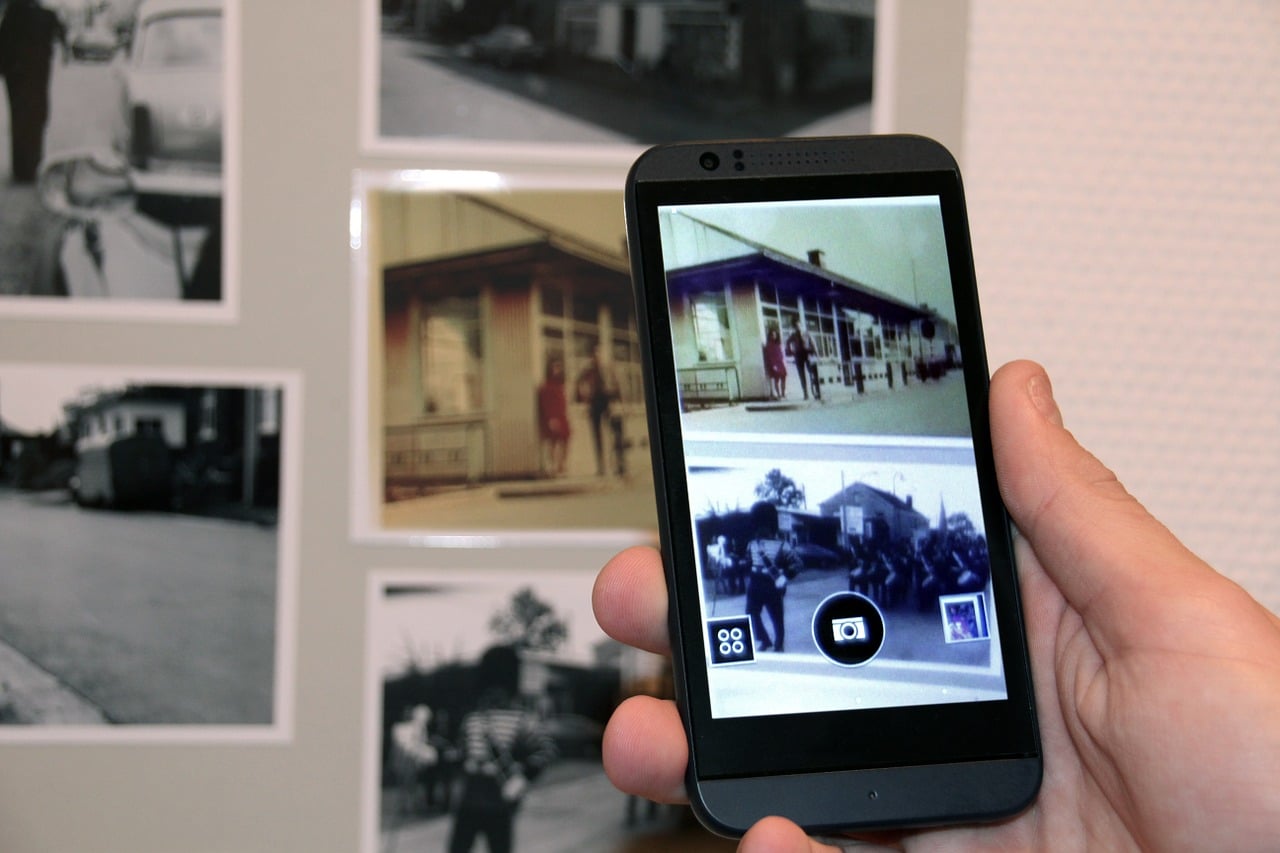
smartphone-597263_1280And, actually, I just lied. I didn’t even set up the Instagram account—Rachel Thompson, who is the reigning queen of all things social media, took care of all that. You remember in the Wizard of Oz, when Dorothy, Lion, Scarecrow and the Tin Man discover the “man behind the curtain?” Well, if you pull back mine, you’ll find a pretty redhead, aka, BadReadhead Media. Find her on Twitter, Facebook, or Instagram here (she’s also a bestselling author!).

BRHM FB coverSo on this Easter holiday, while still reaching for my nasal spray, I’m offering a public service blog. If you want the inside scoop, a treasure trove of social media advice that includes everything from MondayBlogs (Yup! Rachel invented #MondayBlogs), to Goodreads, Twitter, Facebook, blogging and so on… pop over to BadRedheadMedia, and be sure to take some notes.

Ruby Ink, On Sale Now—Check out the early Amazon reviews!

Filed Under: Blog, Social Media Tagged With: BadRedheadMedia, L. J. Wilson, MondayBlogs, Rachel Thompson, Ruby Ink, Social Media

Ruby Ink, We Are Go for Launch

March 29, 2015 by L. J. Wilson Leave a Comment

home-slides-peace-3“There are a thousand steps…” It’s my favorite line from my favorite movie. It’s a malleable multipurpose phrase, great for teenagers prepping for SATs and works well with husbands asked to purge garages filled with 15 years of junk. Excuse me, valuable odds and ends, for which a purpose may be imminent.
The thousand step theory also applies to book writing and publishing—two very different undertakings. Although the thousand steps of book writing can feel more like a game of Chutes and Ladders. Climb to step 598 and you may slide back to step 212. Of course, step 212 looks remarkably similar to step 887, which mirrors step 413. Translation: revision, revision, revision. You get to claim 1000 when you send your manuscript off to your agent or editor, and if you’re lucky the counter only resets to step 712.

Publishing comes with its own thousand step process and on March 31st, a day I’ve dubbed Ruby Tuesday, I can loudly proclaim, “Five-hundred and ninety-nine!”

I bet you thought pub day was a sure thing 1000.

Not so fast.

Publication is an accomplishment—an asterisk-marked date for certain. And aside from a lot of Amazon numbers checking, you might indulge in champagne or even attend a launch party (virtual or live) to celebrate. But enjoy the moment, because step 600 forward is a steep hill.

Promotional methods and madness vary with some subject to the generosity of your publisher, perhaps your own pocketbook. My dream “money is no object” publicity event is a themed affair. After scrupulous auditions, actors would be cast to portray the characters in Ruby Ink.

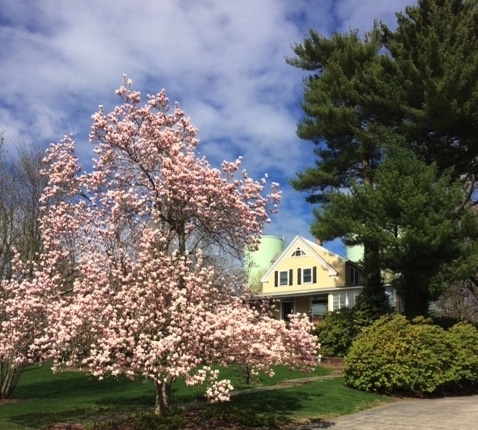
Naturally we’d hold our paparazzi lined soirée at a breathtaking inn, scouting locations until we find something like this. Abstract Enchantment is the seductive setting for much of Ruby Ink, and we’d leave no bottle of wine uncorked in search of the proper locale. Once inside, Aaron, Ruby and the supporting cast could mingle among the guests, offering enticing storyline tidbits. Of course, our launch party is a public—not private—bash, so we’d have to stick to hints—just enough innuendo to let readers know that things get pretty steamy in Nickel Springs. Fun, huh? Well, a casting director I’m not. But if I were considering men for Aaron’s part, you can bet they’d look something like this.

Realistically, Ruby Ink’s promotional efforts will be more social media oriented, working Facebook, Twitter and Pinterest with the vigor of a Jerry Lewis telethon. The biggest boon might be a Ruby Ink virtual book tour, courtesy of TLC Book Tours. I don’t think any publicity effort can out maneuver old-fashioned word of mouth, and a book tour is a great way to light that fuse.

Amidst the Ruby Ink fanfare, real and imagined, I’ll also keep in mind advice my agent gave me when my first novel debuted in 2011: Make every effort you can—you never know. But also know that books launched into the stratosphere usually do so because of an unexpected windfall of publicity.

Here’s hoping Lady Luck blows a little good fortune Ruby Ink’s way.


Filed Under: Blog, Writing Tagged With: characters, Clairmont, L. J. Wilson, Laura Spinella, love story, romance writer, Ruby Ink, series, sex

The Permanence of Ink

March 22, 2015 by L. J. Wilson Leave a Comment

In 2015, body art is as common as cell phones and social media. In fact, you have to be north of 30 to recall a time when two of those staples didn’t exist. Tattoos, on the other hand, have been around, seemingly, forever. A recent Bored Panda post, and the prominence of tattoos in Ruby Ink, got me thinking about the vast history of the topic. From Henna-dyed Egyptians to Julius Caesar, Somoan warriors to 18th century British officers, tattoos are a well-documented form of expression.

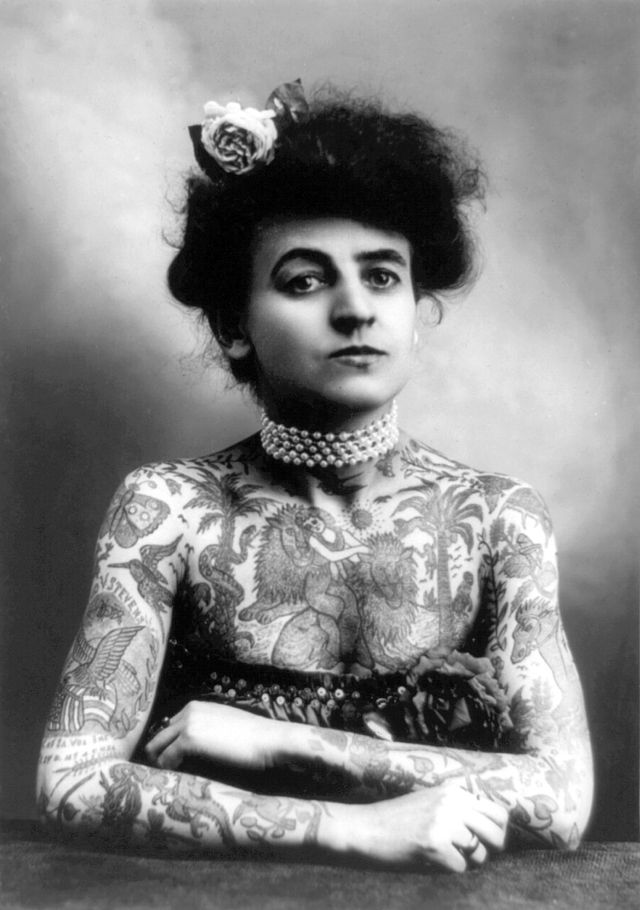
Woman_with_upper_body_tattooed_1907_cph.3a01441
One of the earliest known “tattooed ladies” of the circus, circa 1907

In the United States, the history of ink is more casual, kind of like back roads on a map— always there, not necessarily seen at a glance, and never erased. My earliest recollection of tattoos belongs to a dog-eared copy of Playtime for Nancy—go figure. In the story, Nancy takes a trip to the circus where she gorges herself on hotdogs and soda to the point of puking. Amid the lesson about quality versus quantity, the book references the circus’s tattooed lady, who is stereotyped along with the fat lady and happy trained elephants. Interesting how times change and mercifully people evolve. Today, the same number of tats and a couple of bucks might get you in line at Starbucks, but it certainly won’t rate as an attraction.

Aside from Nancy, I had an uncle who—much to my mother’s disapproval—proudly bore several tattoos. He was a jokester of sorts, a man whose ink complemented his irreverent, colorful nature. He would have been a prime candidate for Bored Panda pixs, if the Lucky Strikes hadn’t gotten to him first.

Ink, for as long as it’s been around, can brand wearers and readers in new and evocative ways. Case in point, my decision to use tattoos as the symbolism in Ruby Ink. I wasn’t breaking new ground; in fact, the easy popularity of tattoos may have spurred me on. Body art is, nowadays, so accepted I saw the tats as a relatable hook for readers. Although, admittedly, one scene in particular uses the tattoos as a well-placed plot device, cranking the heat up a notch.  See how I put body art and my characters to work in this exclusive, sneak peek excerpt.While tattoos are universal, their individual meanings are highly personal, and I didn’t hesitate to take advantage in Ruby Ink.

Want to read more Ruby Ink and discover if Aaron triumphs? Pre-order today, read the book on March 31st! And don’t forget, only days left to enter my $100 Amazon Gift Card Giveaway! Click here to enter. 

Filed Under: Blog, Writing Tagged With: Body art, ink, L. J. Wilson, Laura Spinella, Ruby Ink, tattoos

Is a Pen Name a Good Thing?

March 15, 2015 by L. J. Wilson 1 Comment

SONY DSCA blend of folklore and fact explains how Samuel Clemmons became Mark Twain, another byproduct of the famed author’s time as a riverboat employee. The most validated tale revolves around captain Isaiah Sellers and his pragmatic descriptions of the Mississippi River—its water levels and favorable, or not, sailing conditions. In the margin of his logs, it’s said that Sellers embellished the dry waterway notes, detailing the river with more interesting and less perfunctory information. He’d sign his all his findings—exaggerated and unadorned—“Mark Twain.” And so was born the identity that Samuel Clemmons chose for his own writing. The words he saw as extensions of the truth, or the fiction we know as Tom Sawyer and Huckleberry Finn.

Fast-forward a century and a half, to J. K. Rowling, who chooses her pen name based on a business hunch. Would pre-teen and teenage boys (her intended audience for the yet to be published Harry Potter) respond favorably to a woman’s name (Joanne) on the book’s cover? Well, in addition to a great story, it certainly didn’t seem to hurt.

Between Twain and Rowling, countless authors have chosen pen names for a variety of reasons—some gender bending, others to protect their privacy, ease of use if their given name were nearly unpronounceable, or to avoid confusion. Should you have suffered the curious luck of being born Stephen King or Margaret Mitchell, and decide, you too, were a writer, separating yourself from these greats would be a no-brainer. If not, be prepared. Any and all comparisons are guaranteed literary suicide.

With the dizzying metamorphosis of publishing, authors have turned the pen name page again. A pseudonym, along with the aforementioned uses, also signals a shift in genre—something more and more authors are embracing. Rebranding is how trendsetters and even traditional publishing houses refer to it, and L. J. Wilson is my own example. After publishing two women’s fiction novels, the idea sprouted to do something… shall we say, tastefully risqué. Not long into the first draft, it became apparent that if I wanted to write sensual romance, if I wanted to properly brand myself and the Clairmont series, a pen name was paramount.

I tried on names like dresses in a fitting room—you just know what’s a keeper and what to toss aside. I thought about pseudonyms that might resonate with readers, wondering what would do more harm than good. In the end, I went with something that was a natural fit, choosing my maiden name and initials. Because I’m so pleased with Ruby Ink, and having developed such a fondness for the Clairmont stories, I was fine with closely associating, and hardly hiding the fact that L. J. Wilson and Laura Spinella are the same person.

Is it necessary? Will the trend continue? Could Laura Spinella have just as easily written Ruby Ink? Opinions will vary, and like everything else in publishing, no one knows for sure. But I suspect there’s a good chance J. K. & Robert Galbraith would agree with that much.

ruby-in-cvr

While you’re here, enter to win a $100 Amazon Gift Card, celebrating Ruby Ink’s release, and don’t miss the Goodreads giveaway. I’m giving away 7 signed copies of Ruby Ink.
“A sultry story… intensely emotional and full of heart. L. J. Wilson is a discovery.”
—Shannon McKenna, New York Times bestselling author
Photo courtesy of gratisography.com

Filed Under: Blog, Writing Tagged With: L. J. Wilson, Laura Spinella, novel, romance, Ruby Ink

Next Page »

Copyright © 2026 L.J. Wilson